

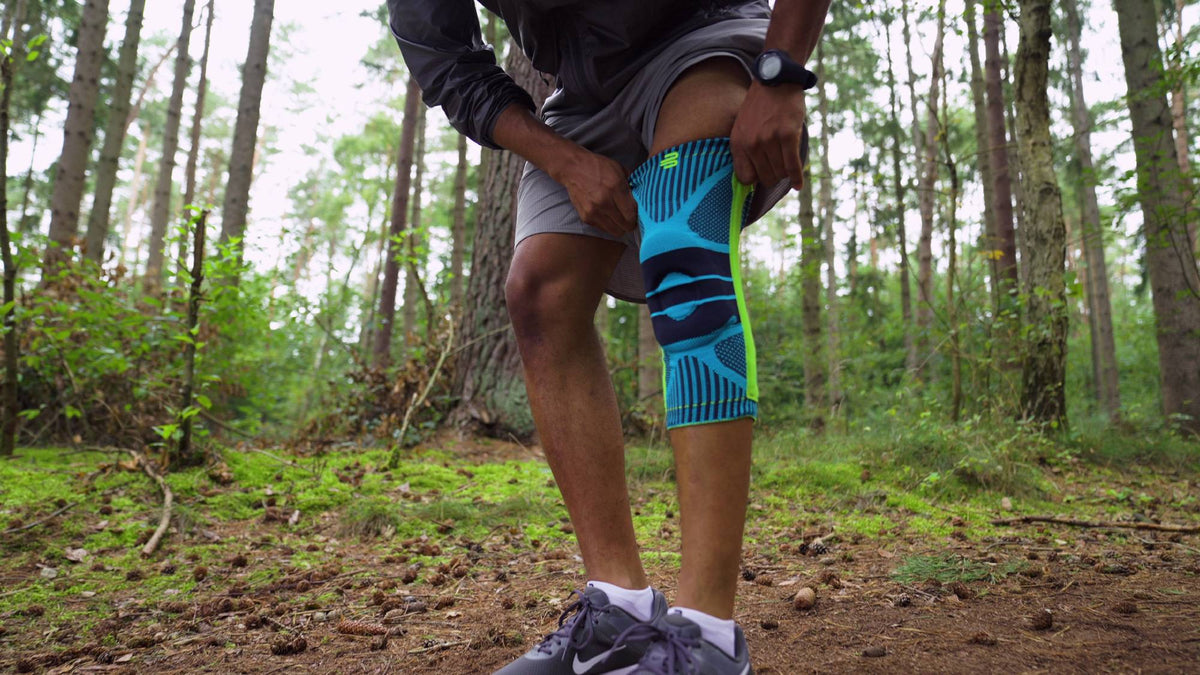
Not every knee support does the same job. Here's how runners can match the right type to where they feel it, how to get the fit right, and when a support isn't the answer at all.
The quick answer: The best knee support for running depends on where you feel discomfort and what you need from it. A knee sleeve gives light, all-round support and warmth. A knee support with a kneecap pad gives more targeted guidance around the kneecap. A patellar strap sits just below the kneecap for discomfort in that specific spot. And a knee brace with side stays or splints is for knees that feel unstable. Whichever you choose, a support works best alongside strength work, not instead of it.
Search "knee support for running" and you'll be met with hundreds of near-identical neoprene tubes, all promising to fix your knees. The reality is more nuanced, and a little more honest. Knee supports can make running feel more comfortable and give you confidence on the days your knees are complaining. But the type matters, the fit matters, and they're one part of looking after your knees rather than the whole answer.
This guide walks through how each type of knee support works, who it suits, and what the evidence actually says, so you can choose with confidence.
Do Knee Supports Actually Work For Running?
It's the question runners ask most, and it deserves a straight answer.
The research on knee supports for runner's knee (pain at the front of the knee, known clinically as patellofemoral pain) is limited. A Cochrane review of braces, sleeves and straps for this kind of knee pain found there wasn't enough high-quality evidence to draw firm conclusions. An international expert consensus published in the British Journal of Sports Medicine was clear that exercise therapy, particularly hip and knee strengthening, should be the foundation of managing it, and described patellar bracing as an area where the evidence is still uncertain.
So why do so many runners swear by them? Because comfort, confidence and feedback matter. Many runners find a well-fitted support makes the knee feel more secure, keeps it warm, and gives the skin and surrounding tissue gentle input that makes them more aware of how the joint is moving. That can be the difference between enjoying a run and cutting it short.
The sensible approach is this: use a knee support to help you feel comfortable while you keep moving, and pair it with a strengthening routine. And if you have significant pain, swelling, or pain that hasn't improved after a week, the NHS advises stopping running and seeing a GP or physiotherapist.
The Four Main Types Of Knee Support
1. Knee Sleeves
A knee sleeve is a pull-on tube of fabric that covers the whole knee. It's the lightest, least restrictive option, and the one most runners start with.
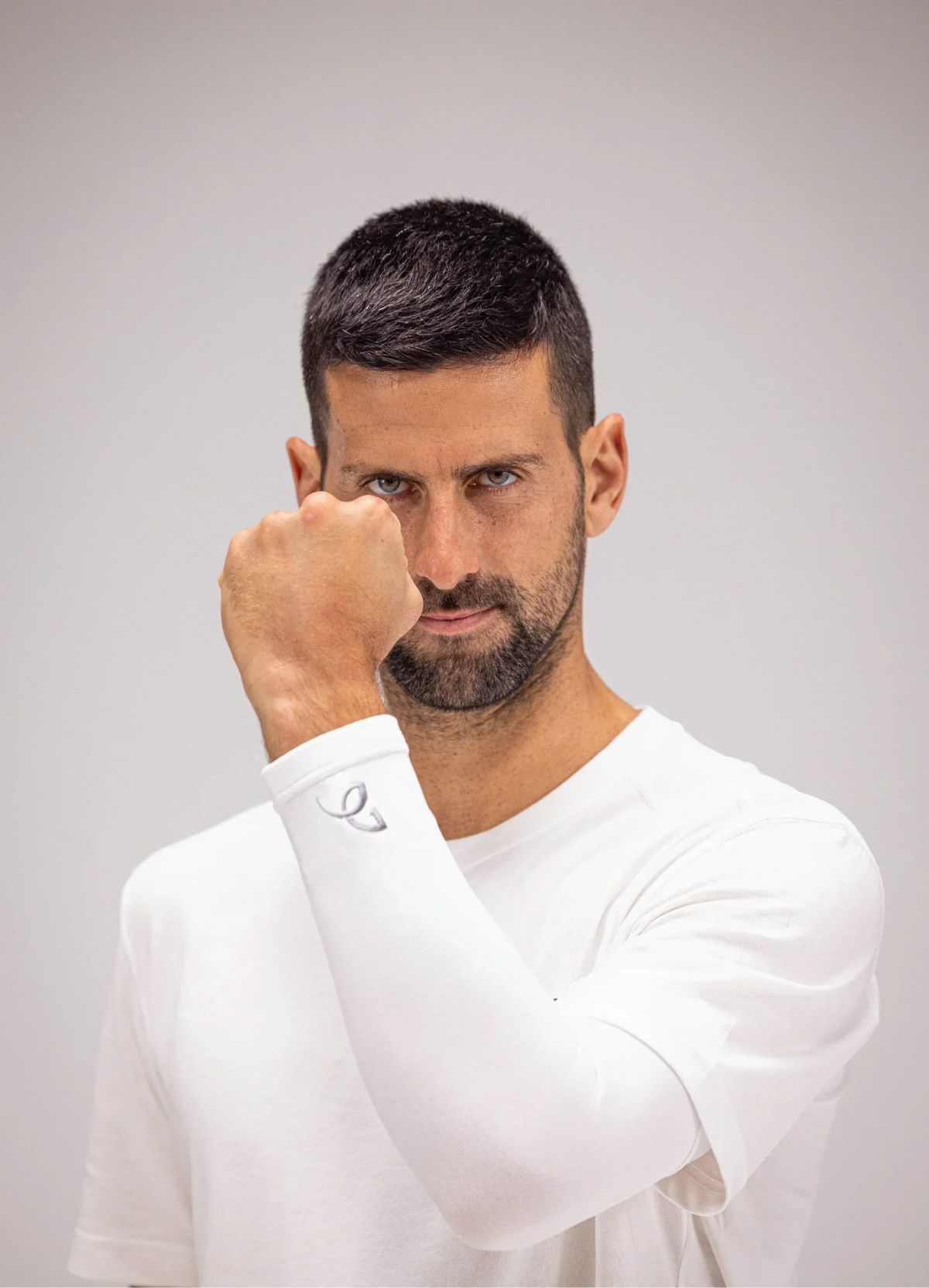
Most sleeves work through compression. The Incrediwear Knee Sleeve takes a different approach. Rather than squeezing, its fabric is embedded with germanium and carbon, which Incrediwear says are activated by body heat to support circulation around the joint. Because it doesn't rely on compression, it's comfortable for long wear, and it has integrated side stays for a little extra stability. It's also the sleeve Novak Djokovic wears, and there's a signature edition in his all-white colourway.
Best for: general knee stiffness or tiredness, runners who want light support they barely notice, and wearing before and after runs.
2. Knee Supports With A Kneecap Pad
This is a step up in structure. A knitted support with a padded ring around the kneecap helps guide the kneecap as you move and spreads pressure around the joint.
The Bauerfeind GenuTrain is the benchmark here. Its Omega+ pad encircles the kneecap, and its three-dimensional knit is designed to give the skin and muscles around the knee constant feedback during movement. Bauerfeind has been engineering supports in Germany for decades, and the GenuTrain is the brand's best-known product.
For trail runners and hill walkers, the Bauerfeind Sports Outdoor Knee Support applies a similar principle with a merino wool knit and an adjustable strap system designed with long descents in mind.
Best for: discomfort around or behind the kneecap, runners who want more noticeable support than a sleeve, and downhill or trail running (the Outdoor version).
3. Patellar Straps
A patellar strap is a narrow band that sits just below the kneecap, over the patellar tendon. It's the most targeted option, and it barely covers any of the knee, which makes it very light to run in.
The Bauerfeind GenuPoint uses a four-point pressure pad positioned on the tendon, with adjustable straps on each side. The Bauerfeind Sports Knee Strap follows the same idea in a sport-specific design, low profile enough to sit under running tights.
Best for: discomfort in the spot just below the kneecap, and sports with lots of repeated loading, like running, jumping and landing.
4. Knee Braces With Splints Or Stays
When a knee feels like it might give way or shift sideways, a sleeve or strap isn't enough. Braces with side splints or hinges add mechanical support to resist unwanted sideways movement.
The Bauerfeind GenuTrain S combines the GenuTrain's knit and pad with lateral splints and adjustable thigh and calf straps. It's designed for knees that need structural guidance as well as support. If you've had a significant knee injury or your knee feels genuinely unstable, speak to a physiotherapist before choosing a brace at this level.
Best for: knees that feel unstable, and returning to activity under professional guidance.
Knee Sleeve vs Knee Brace vs Strap: At A Glance
| Type | Where it helps | How it feels | Nalu options |
|---|---|---|---|
| Knee sleeve | All-round, general stiffness or tiredness | Light, flexible, barely noticeable | Incrediwear Knee Sleeve, Novak Djokovic Knee Sleeve |
| Support with kneecap pad | Around or behind the kneecap | Snug, guided, more noticeable | GenuTrain, Sports Outdoor Knee Support |
| Patellar strap | Just below the kneecap | Very light, targeted pressure | GenuPoint, Sports Knee Strap |
| Brace with splints | Knee feels unstable | Firm, structured | GenuTrain S |
Getting The Fit Right
The best knee support in the world won't help if it's the wrong size. Most problems runners have with supports come down to fit.
Measure, don't guess. Most supports are sized by leg circumference, usually measured a set distance above and below the knee. Measure with your leg straight and relaxed, and follow the specific size guide for the product, because sizes vary between brands.
How tight should a knee support be? Snug enough that it doesn't slide down when you run, but never so tight that it leaves deep marks, causes tingling or numbness, or makes your lower leg feel cold. If it's digging in at the top or bottom edge, try the next size up.
Check the position. A support with a kneecap pad should have the kneecap sitting in the centre of the ring. A patellar strap should sit on the soft tendon just below the kneecap, not on the bone.
Can A Knee Brace Cause More Pain?
It can, which is exactly why fit and choice matter. A support that's too tight can restrict circulation and irritate the skin. One that's in the wrong position can put pressure where you don't want it. And the wrong type, such as a strap when the discomfort is actually around the kneecap, simply won't help.
If a support makes your knee feel worse, stop wearing it. And if your knee pain is getting worse regardless, that's a sign to get it properly assessed rather than trying a different support.
A Support Is Part Of The Plan, Not The Whole Plan
The strongest message from the research is that knees respond best to strength. Exercises for the hips, glutes and thighs help control how the knee moves on every stride. Gradual increases in mileage, good recovery between runs, and the right footwear and insoles all play their part too. Our Move blog covers how the whole movement chain connects, from your feet upward.
A knee support helps you stay comfortable and keep moving while that work does its job.
Frequently Asked Questions
Do knee supports work for running?
Many runners find knee supports make running more comfortable and give them confidence, particularly a well-fitted sleeve or a support with a kneecap pad. The research evidence is limited, though, so a support works best alongside strengthening exercises rather than as a standalone fix.
Should I wear a knee sleeve or a knee brace for running?
For general stiffness or light support, a knee sleeve is usually the best place to start. If discomfort centres on the kneecap, a support with a kneecap pad offers more targeted guidance. Braces with splints or hinges are for knees that feel unstable and are best chosen with a physiotherapist's advice.
What is the best knee support for runner's knee?
Runner's knee usually means discomfort around or behind the kneecap, so many runners prefer a support with a padded ring around the kneecap, such as the Bauerfeind GenuTrain. If the discomfort is just below the kneecap, a patellar strap is the more targeted option.
How tight should a knee support be for running?
It should be snug enough not to slip down while you run, but it should never cause numbness, tingling, deep marks or a cold lower leg. If it does, try a larger size.
Can I wear a knee support every time I run?
Yes, there's no problem with wearing one regularly if it feels comfortable. It's still worth building up the strength of the muscles around your knee, so you're not relying on the support alone.
Should I sleep in a knee sleeve?
Most compression supports aren't designed to be worn overnight. Incrediwear's non-compressive sleeves are an exception, and the brand says they're suitable for 24/7 wear. Always check the guidance for your specific product.
When should I see a professional about knee pain?
The NHS advises seeing a GP straight away if knee pain is severe or the knee is swollen, and seeing a GP or physiotherapist if pain hasn't improved after a week.
Need Help Choosing?
Choosing a knee support shouldn't be guesswork. If you're unsure which type or size suits you, our team is happy to talk you through the options. Just get in touch.
Explore our full Bauerfeind and Incrediwear ranges, or browse the Move collection.
This article is for general information and isn't a substitute for advice from a medical professional. If you have a knee injury or persistent pain, please speak to your GP or a physiotherapist.

Share:
Why Novak Djokovic Invested In Incrediwear: The Story Behind The Sleeve